Can Facial Mapping Help You Treat Your Health From Within? Experts Explain
The ancient practice of face mapping, rooted in holistic traditions, can unveil a profound connection between your unique facial features and your overall wellbeing.

Ever wonder what secrets your face holds? The holistic practice of facial mapping views your face as a mirror that can reflect your inner well-being.
People say your eyes are the window into your soul, but it’s really your entire face that reflects your inner being. Proponents of facial mapping claim that your facial features are a portal to your physical and mental health. Rooted in long-standing practices like traditional Chinese medicine and Ayurveda, mapping your specific facial features may help you get to the root of certain health issues and even provide valuable insights into who you are.
As your largest organ, your skin reveals a great deal about how much sleep you’re getting, what your diet might look like, and if you spend a lot of time in the sun. And some believe that by using the ancient practice of facial mapping, you can go deeper to understand what’s going on beneath your skin, too.
Face mapping is thought to have originated thousands of years ago, with its first recordings found in the Huangdi Neijing (The Yellow Emperor’s Classic of Medicine), attributed to Chinese emperor Huangdi, circa 2600 BCE. The practice is based on the idea that different parts of the face correspond to specific organs and systems within the body.
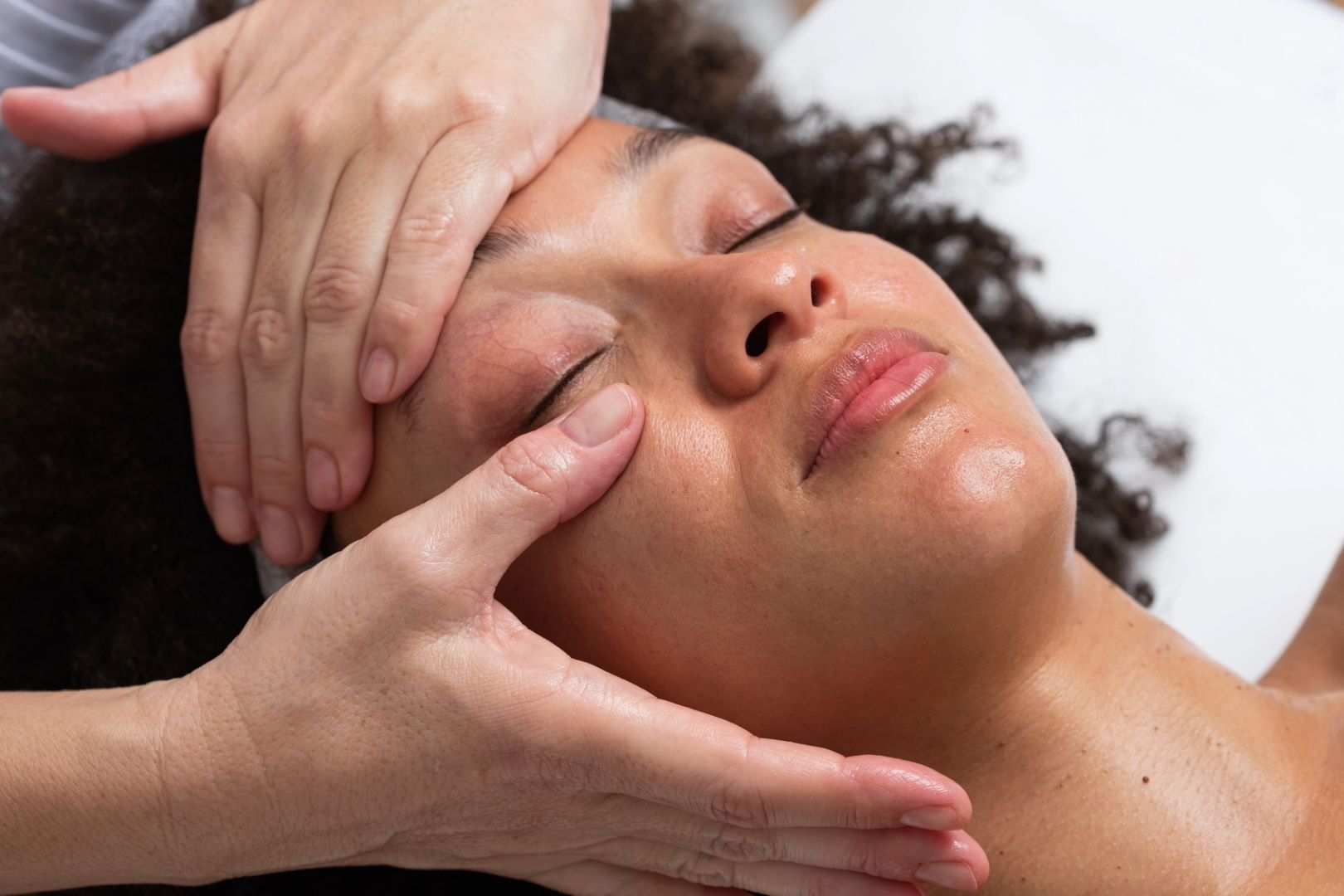
A typical face mapping session begins with a practitioner asking you about your areas of concern so you can point out any skin, health, or emotional issues that have been bothering you, or that you have simply noticed. Then, a practitioner will “read” your face based on your features. Facial mapping expert Julie Civiello Polier explains that one of the main tenets in face reading is “more is more, less is less.” Whatever feature is the largest and widest is typically the place to start. From there, you would receive information about your face and talk with your practitioner about next steps for finding the root cause of any issues that are bothering you.
Practitioners might use the face map from Huangdi’s guide, from other practices like Ayurveda, or a combination of maps to read your face. (Polier says she uses seven different maps from various traditions, layering them to find overlap and patterns.)
The legitimacy of face mapping, however, is a subject for debate, says esthetician Justine Kahn, founder and CEO of Botnia Skincare. From a Western medicine standpoint, there's limited scientific evidence to prove a direct connection between specific facial areas and internal organs. However, Kahn says we shouldn’t discount this practice.
“From a holistic and traditional standpoint, face mapping has been practiced and trusted for centuries,” Kahn says. “The reason why we probably don't know more about face mapping is that we have other Western-diagnosis ways to treat illness, and when there is no money to be made or we have other means, there is less research on an ancient modality validity.”
From a dermatological perspective especially, Kahn believes that face mapping can offer valuable insights. “If you are open to it, finding a practitioner who is versed in face mapping is a potential boon for decoding what could be going on with your skin.” Look for someone who is a certified esthetician and has studied a practice with a long history of face mapping, like Ayurveda or traditional Chinese medicine.
“[It’s] surprising for people to realize that their relationship with their mother, their relationship with their father, with their siblings, their childhood struggles all show up on their face.”
Board-certified dermatologist Marisa Garshick, MD, says that the practice does, of course, have its limitations. “While some people may rely on face mapping to consider causes of conditions, it is important to remember that most skin conditions have multiple causes and may be multifactorial, so you can’t just rely on face mapping.” For instance, acne can be caused by a number of issues, including clogged pores, stress, certain medications, or polycystic ovarian syndrome.
Interested in learning more? Check out You Are What You Think.
According Polier, there are three main benefits of mapping your face.
Facial mapping is helpful for getting a better idea of why you’re struggling with skin issues, be it breakouts, oiliness, or dry skin. Beauty company Dermalogica has even developed a virtual AI tool that you can use for free to map your face and decipher potential skin issues.
“If you are wondering why the same breakout continues to pop up in the same spot again and again, facial mapping can help,” Polier says, by getting to the root cause of the issue. Treating your skin in this way isn’t a quick fix, the expert points out, but by getting to the heart of the problem, you may be able to keep the issue from coming back.
There’s much more to facial mapping than getting to the bottom of that pimple on your chin. Facial mapping can help you “connect the dots” on issues you might not be able to resolve through traditional means by allowing you to access messages from inside the body, Polier says.
“I think of our skin like one giant message board for everything that’s going on internally with our organs and systems, as well as what’s happening externally woven within our lifestyles, our relationships, our relation to stress, inspiration, and fulfillment,” she says. “It’s often really surprising for people to realize that their relationship with their mother, their relationship with their father, with their siblings, their childhood struggles, all show up on their face.”
Finally, a face reading can be a profound witnessing of oneself. “If you aren’t actively furthering your loving relationship with yourself, then you aren’t having a full experience of this gorgeous life,” Polier says.
Facial mapping can be a moving way to rediscover your confidence, as “it can also bring up a lot of beauty and deep praise, sometimes that someone has longed for for many years,” she adds.
If you’re curious about trying face mapping, you can use the guide below to get started. Remember, everyone’s body is different, and other factors like genetics, skincare routines, and external environmental factors also play roles in the relationship between your skin and internal body. Your face can also change day to day, based on what’s happening in your life (happiness, grief, and other emotional issues can affect your face).
Remember, more is more in face reading, so look for the biggest and most prominent facial features. “For example, if the ears are really large, it means this person will have a long life, they take risks, and they have the capacity to listen and hear more than others,” Polier says. If someone’s ears are small, she adds, that can indicate a few different things — one being that the person might hear you, but they don’t really listen well.
A wider face shape and jaw is another feature to look for. Referred to as a “king” shape, Polier says, this shape indicates that someone is a natural leader. “This is somebody who is really well versed in declaring things using their throat chakra,” she says. “They also are interested in having a plan and are more focused on getting the facts than hearing a story.”
Kahn says that the forehead is connected to the digestive system. “Issues here might suggest a need to adjust diet or increase water intake,” she explains. Look for oiliness, dryness, or bumps along the hairline to understand if you need to give your gut some love. Because the forehead is also connected to the nervous system, deep lines can indicate anxiety or an overactive nervous system in general.
The eyes represent the ovaries and testes, Polier says. The area under the eyes can also be telling. “Dark circles can reveal a kidney imbalance, a leaning relationship into fear, and a lack of proper minerals and dehydration,” she adds.
Breakouts between the brows might indicate overconsumption of alcohol or rich foods, Kahn says, as this space is linked to the liver. The shape of your brows can also lend insight into your personality, according to Polier. “If the arch of your eyebrow goes up into a peak or point, this can indicate that a person is quite critical of themselves, and perhaps with others too, or may have impossibly high standards,” she says.
The cheeks are connected to the respiratory system, Kahn says. Redness or breakouts here could be a sign of allergies or respiratory stress.
Tied to the cardiovascular system, nose redness might suggest blood pressure issues or a need for more heart-healthy fats, Kahn says. The tip of the nose represents the heart, Polier says. “If the nose tip is very wide, then it usually indicates this person has a very large and wide-open heart,” she explains. “If the nostrils are open and visible, this means they are very generous.”
This area is often associated with hormones, says Kahn, explaining breakouts in this area are often seen with hormonal imbalances or menstrual cycles.
Instead of seeing your outer body as something separate from your inner body, face mapping bridges that gap and uncovers the relationship between the two. A face mapping session can help you learn about yourself based on your physical characteristics, but these qualities can also change based on what’s going on in your body and in your surrounding environment. (For instance, Polier says that her earlobes become more attached and unattached depending on how close she’s feeling with her family.)
While not a replacement for medical treatment, facial mapping can provide valuable insights about your inner life and outer appearance. “The value lies in a holistic approach, encouraging individuals to view skincare not just as a topical solution, but as an integrated part of overall well-being,” Kahn says.
Once you’ve identified issues through face mapping, the next step would be to focus on the areas of your body that need healing through lifestyle changes and work with trusted professionals, like an acupuncturist or doctor to further evaluate and diagnose what’s showing up on your face.