The Sober Curious Shift: Why Millions are Rethinking Their Relationship with Alcohol
Learn how the growing sober curious movement provides a way for people to explore their relationships with alcohol and reassess its place in their lives.


It might be present in every social environment, but the science around alcohol is clear: Avoiding it, or reducing how much of it we drink, is good for our health. The growing sober curious movement provides a way for people to explore their relationships with alcohol and reassess its place in their lives without feeling isolated.
If you’re rethinking your relationship with alcohol, you’re not alone. A 2025 Gallup poll and a report from Circana confirm what you may have noticed on social media: A growing number of people are taking up a sober curious lifestyle, and a record low are choosing to drink alcohol, for good reason. There’s more than enough data to show that drinking alcohol, especially in excess, is not good for our health, and it remains the most misused substance in the United States and around the globe.
Given the ubiquitous nature of alcohol in our culture, giving it up or consuming it less often can be incredibly difficult. From black-tie galas to backyard barbecues, there are few social environments devoid of the world’s favorite social lubricant. Even movies, TV shows, and advertisements depicting celebrations are rarely without cocktails or champagne.
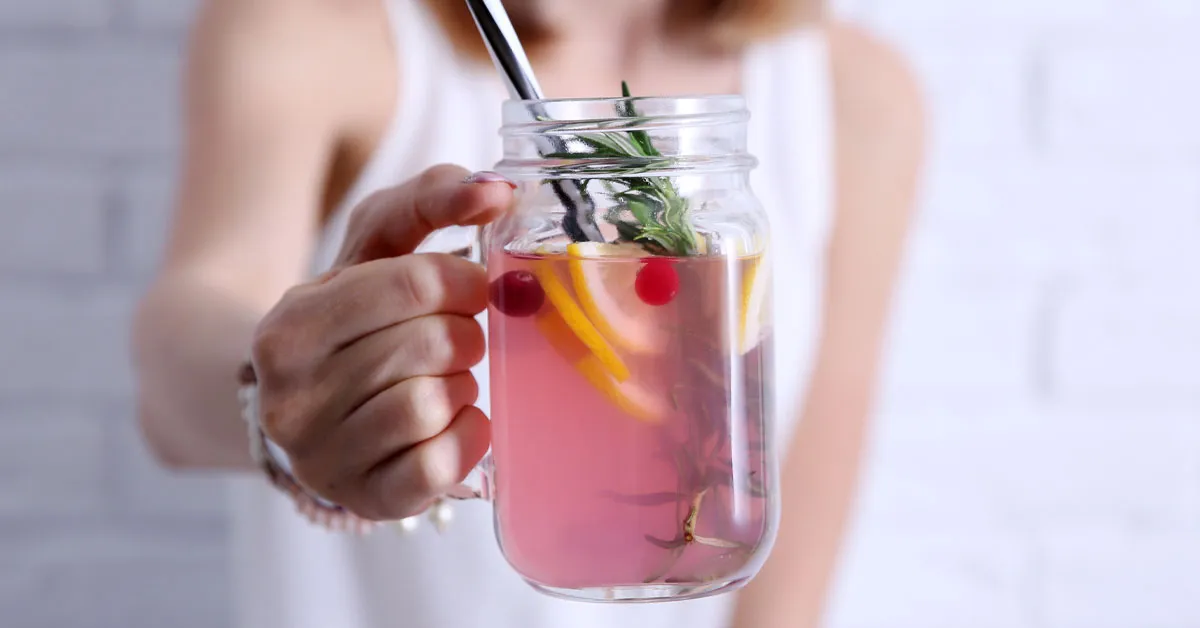
Thanks to the growing “sober curious” movement, a term coined by author Ruby Warrington (her podcast and 2018 book share the same name), choosing to live an alcohol-free lifestyle no longer means settling for club soda and Shirley Temples. As more people opt to swap liqueurs and spirits for zero-proof libations (now a multi-billion dollar industry), new social environments are simultaneously being created — both in-person and on social media — making the experience of ditching alcohol less lonely, and more delicious.
Among the uninitiated, the term “sober curious” always leads to a question: Does it require one to cut out alcohol completely? Not necessarily, at least according to Katie Witkiewitz, PhD, a professor in the University of New Mexico’s psychology department and the director of the UNM Center on Alcohol, Substance Use, and Addictions.
Witkiewitz says being sober curious simply requires a desire to examine one’s relationship with alcohol “and whether you are getting what you need from it or whether it might actually be making life worse.” Abstinence is not required, says Witkiewitz, “but drinking reductions — either the frequency or intensity of drinking — can be really effective to re-examine one’s relationship with alcohol.”
Brooke Scheller, a doctor of clinical nutrition and a functional sobriety specialist, says that being sober curious can look different to different people, and agrees that it doesn’t necessarily require ditching alcohol for good.
“It’s about exploring the idea of living a sober life. That might mean that someone decides to quit drinking and it’s a path they want to move forward on,” she says. “Or maybe they decide they want to be mostly sober and only introduce alcohol at certain times, like at special occasions.”
Scheller credits Warrington’s book when she brings up how using the term “sober curious” gives people another way to answer when they’re inevitably asked why they’re avoiding alcohol: “It’s based on the idea that you don’t have to identify yourself as an alcoholic or have any type of specific relationship with alcohol to decide that you want to see what life is like without it,” she says.
Interested in learning more? Check out The 14-Day Mocktail Challenge
Recent studies on alcohol consumption, and its direct correlation to adverse health effects, might have something to do with why more people are choosing to put down the beer and pick up the kombucha. For decades, it’s been widely believed that drinking small amounts of certain types of alcohol offers a variety of health benefits, but researchers are coming to new conclusions — and that might be a bummer for those who have come to enjoy a beer or glass of red wine with dinner based on the understanding that it could have health benefits.
Some of the immediate benefits of reducing one’s alcohol consumption are improved sleep, increased levels of energy, better decision-making, enhanced cognitive functioning, and a boost in overall well-being.
Scheller explains there’s been a shift in understanding over the past ten years. “We’re now starting to see more research that shows any level of alcohol is actually problematic,” she says. While it might be common to believe that consuming alcohol in moderation is beneficial (such as drinking a glass of red wine for its antioxidants), the nutritional benefits may be outweighed by the risks.
Published in 2018, the 2016 Global Burden of Diseases, Injuries, and Risk Factors Study assessed 16 years of data on global alcohol use and found it to be a leading cause of disease worldwide. Moreover, it found alcohol to be the leading cause of mortality for people who are between the ages of 15 and 49, accounting for nearly 10 percent of all deaths.
The authors of the report came to a very clear-cut conclusion: “The widely held view of the health benefits of alcohol needs revising…. Our results show that the safest level of drinking is none.”
Using new data, the authors of the latest iteration of the global study adjusted their recommendation for age: They concluded that because young people face higher health risks from alcohol consumption, no amount of alcohol is safe for people under the age of 40, or for people of any age with underlying health conditions. In small amounts, it may offer some health benefits for people over the age of 40.
The results of another study that examined drinking and cardiovascular health indicated that the benefits associated with drinking are largely dependent on how much a person drinks. The study’s authors wrote that some people who drink in moderation were less likely to experience heart attacks, stroke, heart failure, peripheral artery disease, and aneurysms, though they add that encouraging drinking as a means of reducing cardiovascular risk “would be unwise,” since there are other ways to improve health without the side effects — and potential negative impact — of alcohol consumption.
According to Witkiewitz, heavier drinking — defined as consuming eight or more drinks per week for women, or 15 or more drinks per week for men, per the Centers for Disease Control and Prevention (CDC) — is associated with several health risks that are short term (such as accidental injury or death from acute intoxication, sleep problems from regular use, memory problems, dehydration, and malnutrition) and long term (such as liver and gastrointestinal disease, hypertension, certain forms of cardiovascular disease, increased risk of cognitive impairment, and increased risk of many cancers, per the Office of the Surgeon General in 2025).
Scheller adds that risks associated with regular drinking include nutrient deficiencies, impact on brain volume, and changes to mental health including increases in anxiety and depression, among other things.
Despite the laundry list of health risks, alcohol has historically been a cornerstone of American social life.
Data from the 2019 National Survey on Drug Use and Health indicated that 85.6 percent of people above the age of 18 consumed alcohol at some point in their life. That same year, the average American consumed 2.6 gallons of pure alcohol — significantly higher than the global average of 1.5 gallons — ranking the United States 39th in the world for consumption.
However, while 2019 data showed widespread use, the landscape has evolved in just a handful of years. New 2025 data from the aforementioned Gallup poll and the National Institutes of Health (NIH) suggests alcohol consumption has hit a 90-year low, with only about 54% of Americans now identifying as "current drinkers." This may signify a possible paradigm shift in consumption habits.
While the majority of those who drink do so moderately, the prevalence of heavy use remains a public health concern. “Approximately one-quarter of Americans engage in heavy drinking and about 10 percent meet the criteria for alcohol use disorder (AUD), although most have a mild alcohol use disorder,” says Witkiewitz. Data from the National Institute on Alcohol Abuse and Alcoholism (NIAAA) underscores this reality, reporting that as of 2024, 27.9 million Americans over the age of 12 meet the criteria for AUD.
The deep-seated ties between alcohol and American culture make the choice to cut back particularly challenging. As Scheller notes, “it’s really hard to quit drinking when everyone around you drinks.”
She continues, “This is why it’s so important to have community and shared experience when going on this journey. Research shows that part of why people are more successful when they attend Alcoholics Anonymous is because of the community element and the interactions with others who are in a similar mindset.” But for some people, she adds, AA may seem extreme. As more people go alcohol-free, a range of support groups, communities, and social media groups are offering places to learn, feel seen, and, in some cases, make new friends.
“There are numerous benefits to either ceasing or reducing drinking, and the relationship is pretty linear, so the more you reduce, the more benefits you receive — but all reductions are valid and helpful,” says Witkiewitz. She notes that some of the immediate benefits of reducing one’s alcohol consumption are improved sleep, increased levels of energy, better decision-making, enhanced cognitive functioning, and a boost in overall well-being.
According to Scheller, alcohol has a detrimental effect on the gut, changing the balance of gut bacteria and contributing to symptoms that go far beyond indigestion, including skin issues like acne and psoriasis, headaches, chronic pain, and hormone imbalances.
She encourages people who are reducing their alcohol consumption to use nutrition as a tool — not just to help heal the body after regular drinking, but to stay sober. Eating protein- and fiber-rich foods along with healthy fats, for example, can help manage blood sugar and prevent cravings for both alcohol and sugar, per The Recovery Village.
“Many of the people I work with are trying to rebalance their gut after discontinuing alcohol,” Scheller says, pointing out that deficiencies in certain vitamins are very common in people who drink regularly. Using healthy foods to restore those nutrients helps her clients “really feel the benefits” of giving up alcohol, she adds.
“Some clients say, ‘I cut it out and I expected to feel more energy.’ Sometimes that just means there’s still something that needs to be addressed through diet, supplementation, or other lifestyle changes,” Scheller notes.
It’s clear that reducing alcohol consumption is in the best interest of our health. But for some people, Witkiewitz says, ceasing alcohol consumption completely can come with risks.
Alcohol withdrawal can be deadly, “so quitting cold turkey is not advised for heavy drinkers, who can experience a life-threatening physiological reaction to not having alcohol in their system,” Witkiewitz says. She recommends that people who drink heavily and want to drink less speak with their primary care provider about options for a safe detox.
Understanding that alcohol doesn’t offer the kind of health benefits many of us believed — and that the risks are higher than previously known — doesn’t mean that you can’t make the choice to have a drink at your next dinner party. Whatever one’s relationship with alcohol, having knowledge about its impact on our bodies enables us to take the first step in living a sober curious lifestyle: asking informed questions about its role in our lives.
Whether you choose total abstinence or a mindful reduction, the goal of the sober curious movement is to empower you with the agency to choose clarity over habit. And backed with the latest science and a supportive community, you may feel better equipped than ever to make decisions that prioritize your long-term vitality, one intentional choice at a time.