Do Animals Understand Us? Here’s What Science Says
Your pet may not be able to speak, but that doesn’t mean you two can’t find ways to communicate. Here’s how to talk and listen to the beloved animals in your life, according to experts.
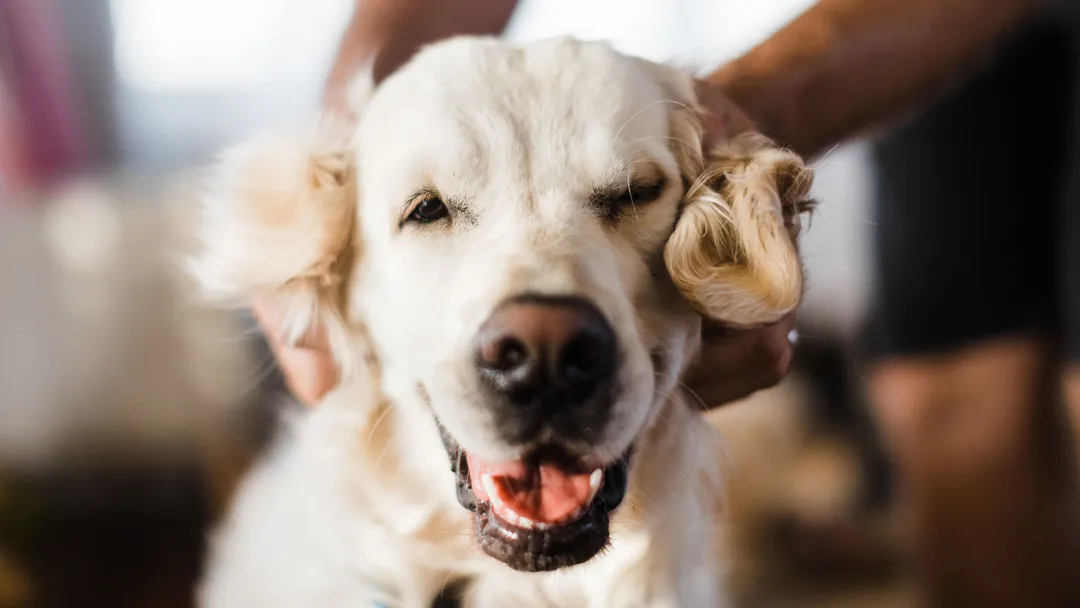

It doesn’t matter that your dog can’t actually say the words “I love you” when he greets your return home with a wagging tail and those adorable puppy eyes. Listen carefully and you’ll notice that our dogs, cats, and other sweet pets find ways to express themselves to us loud and clear. Here’s what to know about the animals we love and how to strengthen your bond with them.
Knowing how to communicate with other members of your household is the key to having the best relationship possible, whether it’s with a partner, parent, child, or roommate. This is also true for your dog, cat, and other pets like birds, guinea pigs, or horses, according to veterinarians and other experts on animal behavior. Plus, there are ways to understand what your animal is trying to tell you.
Does it sometimes seem like your pet understands what you’re talking about, almost nodding along to what you’re saying to them, or are you imagining things? No, they really are that perceptive. “Animals are very bright,” says Doug Mader, DVM, a triple board-certified veterinary specialist and author of The Vet at Noah’s Ark, based in the Florida Keys, Florida. “Even if you may not be able to interpret what they are thinking, it doesn’t mean that they are not thinking and assessing situations, commands, and the behaviors of their owners. There is a great likelihood that they do understand far more than we give them credit for.”
Alex Schechter, DVM, owner of Burrwood Veterinary in Royal Oak, Michigan, agrees: “It is widely accepted that animals can communicate and understand us through body language, tone of voice, and physical touch,” he says.
Evidence backs this up. One study showed that dogs are skilled at interpreting our facial expressions, while another found the same for tone of voice, and past research posited they can even use our eyes to understand our behavior and emotional state. And though their standoffish reputation says otherwise, cats listen carefully to their human owners’ voices far more than we realize, per another study.
In return, pets express themselves clearly to us, research notes, but sometimes in ways that humans don’t recognize. “A yawn, lip lick, or eyeroll is — to a dog — an obvious expression of stress and a request for space," says Megan Marrs, a dog trainer, animal shelter volunteer, and owner of K9 of Mine, based in Austin, Texas. "Unfortunately, we humans aren’t always very good at picking up on these signals.” She adds that studies have shown that cats meow specifically in an effort to communicate with humans.
Lindsay Warren, a former veterinary technician and Missouri-based creator of the blog From Four Legs to Two, says animals also take note of the types of noises we make, and even our scents. Animals can smell things that indicate stress, like sweating, and pick up on fear and nervousness.
Placeholder ehwidgets:video

How these things are interpreted depends on the animal species, the animal’s personality, and their history, explains Warren. “Each animal has their etiquette. It’s like meeting someone from a different culture. Things we might think of as a sign of love could be an insult in their culture,” Warren points out. “For example, getting in your dog’s face and kissing them all over — well, in the dog world, this intrusion could be taken extremely negatively, but you’re just trying to love them.” All the more reason to learn your pet’s communication style.
Interested in learning more? Check out Soul-to-Soul Animal Communication
Call it animal intuition or animal telepathy, but one thing that makes furry friends so special is that they’re highly attuned to our moods, miraculously offering us support and love when we need it the most. Who hasn’t felt like a million bucks when their cat came to cuddle in bed when they were under the weather, or the dog settled at their feet lovingly when they were on the verge of tears?
“Studies have shown that dogs can pick up on our happiness, sadness, and anger. They can read us. They’ll come over and lick tears from our face,” says Linda Simon, MRCVS, a veterinary surgeon and consultant for FiveBarks in Buckinghamshire, England. And when we’re happy, they’re happy, too. (Need more proof? Watch this adorable video of a horse playing with its human friend as they make snow angels together.)
“Each animal has their etiquette. It’s like meeting someone from a different culture. Things we might think of as a sign of love could be an insult in their culture.”
It’s not for naught that nursing homes will bring in pets to shower love on residents and colleges have days where they bring in puppies to cheer up stressed-out students. There’s something to be said for “pet therapy.” That bond is real and powerful. Numerous studies have shown that pets provide mental and physical health benefits, like lowering blood pressure and reducing our visits to the doctor.
It’s clear that our animals are in tune with us, so how can we better communicate with them? Not surprisingly, what matters to animals is not only what you say, but how you say it. Use a tone of voice that your pet will respond to. Pet-directed speech (PDS), a type of speech similar to baby talk and usually higher pitched than how we talk to other humans, is helpful. Studies have shown that PDS draws adult dogs’ attention more efficiently than adult-directed speech (ADS). And this kind of talk woos not only dogs, but also can be effective with cats, notes one study, and even horses, per another.
“Rhythm and tone are everything! If you’re trying to train your dog to stay when you say ‘Stay,’ don’t say ‘Stay, stay, stay’ fast. [Instead], elongate the vowels, say it with a higher pitch, and say it slowly,” says Russell Hartstein, a Los Angeles–based certified dog behaviorist and trainer and the founder of Fun Paw Care.
Conversely, a deeper tone in your voice can be viewed as negative, as can certain body postures, explains Dwight Alleyne, DVM, a Georgia-based veterinarian and advisor for Betterpet. For example, standing tall when you approach a dog can signal dominance.
Body language plays a role with pets like guinea pigs, hamsters, birds, and rabbits, too. “These are animals that are evolutionarily considered ‘prey species,’ so any assertive body language can be seen as a sign of potential aggression to them,” says Dr. Mader. Something to keep in mind when you’re trying to create a loving bond with them, not scare them.
Certified animal trainer Diana Ludwiczak, CEO and creative director of the educational website Birdy Birdy Birdy, says when you’re communicating with parrots and other birds, you have to pay attention to their body language for important clues. If a parrot is uneasy, they will lower their head and puff up their feathers, or their pupils may rapidly dilate and constrict. “If you reach out to the bird when they are in this state, you may get a bite,” Ludwiczak says.
Even though you and your pet can communicate without them talking, that’s not to say the path to communication is without missteps. Experts we interviewed say that using these simple tips will help keep your relationship with your animal strong and secure.
Animals may not use words, but as noted above, every species uses their body movements, sounds, and facial expressions to “talk” to us. Take the time to observe and understand their cues and respect the natural — and different — communication styles from one animal to the next.
Talk through moments of discomfort gently and soothingly with your pet — and listen to them via their body language. For example, “If your pet looks uncomfortable or expresses fear [with their body language], back off, and slowly ease [back] into the conversation,” says Dr. Schechter. Generally, the snarling of the lips on a dog, the laying back of the ears on a horse, or a cat with its tail lifted straight up are signals that you should proceed with caution.
Be clear and consistent with rules, what you want, and what is expected. If you reward a pet for something one time and punish another time, it’s confusing. If you’re unsure about what might be going on with your animal, speak with your veterinarian to learn more.
Keep commands simple so your pet can understand them, and use the appropriate tone of voice and speed of your words that will really capture their attention.
Do not make fast, jerky hand and arm movements when greeting a dog, particularly one who doesn’t yet know or trust you. This can make them nervous, especially when combined with eye contact, and can lead to a defensive attack, explains Athena Gaffud, DVM, who works with Veterinarians.org and is based in the Cagayan Valley in the Philippines.
Forget reprimanding your cat when they don’t want petting or hugging. They’ve likely had enough. Scolding them about this does nothing toward building your bond. Respect their boundaries, just like with a person.
Avoid speaking aggressively and yelling, and never, ever hit or physically hurt your pet, who won’t understand what you’re trying to tell them, and will only make them angry, fearful, or both.
Being patient and calm works best to build a bond, even if your adorable dog has eaten yet another shoe or your sweet cat has scratched up your brand-new sofa.
And above all, be sure to leverage positive reinforcement throughout your communication and training. “Never underestimate the importance of positive reinforcement," says Schechter. "Focus on the positive, rather than the negative. Reward good behavior and praise your pet to encourage them to continue doing that [desired] behavior.”
Roger Caras, author of A Dog Is Listening: The Way Some of Our Closest Friends View Us, once said, “Dogs are not our whole life, but they make our lives whole.”
The bond between pets and their owners is one of life’s great joys. Paola Cuevas, DVM, a veterinarian and behaviorist with Pet Keen, based in Quintana Roo, Mexico, says: “Be patient and kind. Any love you give to a dog will return back to you multiplied in priceless tail wags. And any love you give to an animal makes you a better person.”
This is true for all pets. Regardless of the species, the foundation remains the same: Treat your animals just like you would the humans you love — with reverence, clear communication, solid boundaries, and a gentle and patient approach — and you'll reap unconditional love tenfold.





.webp)